
The Energy World Is Based on Robust Infrastructures
Annual Report 2025
Robustness, resilience, and reliability have always been key quality criteria for utility infrastructure. In the more recent past, cyberattacks, acts of sabotage, extreme weather events, and supply chain disruptions have increasingly been making headlines. Robust infrastructures must be viewed holistically from various perspectives and designed using interdisciplinary collaboration. This is precisely our goal and, by the way, it is also the guiding theme of the FICHTNER Talks in September 2026.
Fichtner Annual Report 2025
Robustness, resilience, and reliability have always been key quality criteria for utility infrastructure. In the more recent past, cyberattacks, acts of sabotage, extreme weather events, and supply chain disruptions have increasingly been making headlines. Robust infrastructures must be viewed holistically from various perspectives and designed using interdisciplinary collaboration. This is precisely our goal and, by the way, it is also the guiding theme of the FICHTNER Talks in September 2026.
The Energy World Is Based on Robust Infrastructures
Robust Infrastructures Have Always Been Our Specialty
Requirements for infrastructure reliability are high. They must be made available to all users without restriction and reliably in every situation, regardless of time or place. This principle has proven effective and is an integral part of our identity in advanced economies. According to the VDE FNN Fault and Availability Statistics – Supply Reliability, for example, every household in Germany receives electricity 99.9 percent of the time, which corresponds to an average outage duration of just 13 minutes per connection per year. In the struggle to strike a balance between the components defined in the energy policy triangle, energy security has always held a prominent place compared to affordability and climate protection – at least in Germany. Statistics from the International Energy Agency (IEA) illustrate that, due to different development dynamics, population growth, and economic strength, this standard does not apply everywhere in the world. System design priorities vary depending on the goal being pursued and the level of intensity with which it is pursued. It is therefore crucial to consistently align stability and resilience requirements with the specific objectives and prevailing conditions – both in Germany and internationally.
Fichtner provides policy and strategy consulting to support decision-makers in addressing the multifaceted issues involved in balanced long-term planning for complex infrastructure systems.
The Landscape Is Changing Fundamentally
Since the 2015 Paris Agreement, most countries have committed to climate neutrality, with Europe also aiming to achieve net zero by mid-century. This requirement alone poses new challenges for energy security because renewable energy infrastructures are often decentralized and therefore vulnerable in different ways to conventional solutions. The susceptibility of such systems is vastly greater because much of the power generation takes place across a wide area, creating easily accessible points of attack. What’s more, the plants are operated by many different stakeholders according to their own criteria. Cyberattacks, vandalism, and systemic complexity further increase this susceptibility, to name just a few disruptive factors.

Fichtner supports the energy sector, industry, and the public sector with studies, concepts, and implementation projects as they work toward climate neutrality and a resilient energy supply.
Silos Are a Thing of the Past – Robustness Requires Collaborative Solutions
We have achieved a high level of technical reliability through specialized expertise and years of operational experience. In future, however, it will not be enough to safeguard individual technologies in isolation, because an infrastructure based on renewables is highly interconnected. What matters most are systemic impacts across interfaces – technical, organizational, and procedural. Robustness is not achieved solely by the safeguarding of individual components, but rather through sound planning across the entire system logic. One example is the close link between energy supply and water infrastructure. Without electricity, the water supply cannot be guaranteed. And vice versa, a hydropower plant cannot operate and water cooling is not possible without water. The task is therefore systemic, with interdependencies needing to be understood, risks needing to be assessed across different sectors, and measures needing to be taken in such a way that they remain effective even in extreme situations and the ability to quickly restore operations is maintained.
Our engineers possess expert knowledge in various infrastructure sectors and integrate that expertise systemically. This results in a robust perspective that keeps the entire system in view.
Countering Climate Change and External Attacks with Robust Infrastructures
Infrastructure transformation is complex and capital-intensive. On top of this, extreme weather events are placing an increasing strain on the energy system and necessitating adaptations that we did not anticipate to this extent when specifying system components in the past. Plans for the future need to be expanded, reassessed, or, in some cases, completely revised. But that’s not all: The vulnerabilities of complex infrastructure systems are also becoming increasingly apparent as a result of targeted acts of physical sabotage and cyber threats. Practice shows that resilience does not just become relevant when an event and its cascading effects unfold, but rather it must already be taken into account during the preliminary planning phase. Not to mention armed conflicts, which require not only a robust energy system design but also the safeguarding of supply chains.
Our engineers develop customized and robust solutions for every eventuality, while taking tomorrow’s requirements into account from the very beginning. This applies across the board to technology, organization, and IT security.

The Solutions Sound Trivial, but They Are Complex
The infrastructure of modern industrial societies is highly interconnected and complex. As renewable energies are expanded, system complexity is growing noticeably because more components, more stakeholders, and more interfaces are being integrated into a dynamic overall system. This also increases the number of factors that affect stability, availability, and controllability. Robust infrastructures are therefore not created solely through isolated technical measures. The key is resilient system planning, and resilience is also, and above all, a matter of architecture. It concerns the design of interfaces, operational strategies, process chains, data flows, and decision-making pathways – and not solely the safeguarding of individual technology components.
In addition to examining individual components, our engineers consider their role within the overall system and use this to develop a robust system perspective. The question is: What impacts will changes, outages, or disruptions have along the causal chain? From this, we derive a robust perspective for the expanded system boundary that holds up even under stress conditions.
Harmonizing Energy and Digital Infrastructures Makes the Transformation Possible
Renewables make the overall system volatile, decentralized, and complex. At the same time, they provide opportunities for better utilization, more precise control, and broader participation. For these benefits to be truly effective, a high-performance digital infrastructure is required. This is because energy systems utilizing renewable sources are driven not only by physical components, but also by data and decisions. The system creates a dynamic in which, with increasing quantity and criticality, switching operations are performed and decisions are made in real time. These requirements place excessive demands on both human cognitive capacity and conventional system logic. The fundamental difference to existing conventional energy infrastructures lies in the high degree of digitalization of the entire system.

Fichtner plans the digital infrastructure in tandem with the technical infrastructure. This includes communication networks as well as data platforms and control systems. After all, resilience, participation, and flexibility cannot be achieved without digitalization.
Robustness on Both Local Small Scale and International Large Scale
Robustness and resilience can be strengthened on several levels at once. On the one hand, local measures are needed to increase energy generation and to design resilient system architectures, such as through cellular concepts. On the other hand, supraregional and cross-border grid integration needs to be expanded further – such as through interconnectors. In addition, volatile generation profiles require targeted flexibility measures. These include storage systems, demand response, and a digital control system that responds flexibly to changes in supply and demand. What is crucial is that all elements are coordinated with one another: Local, regional, and international should not be viewed as separate spheres of optimization.
As an independent company, Fichtner is both locally rooted and, thanks to its international presence, able to meaningfully bridge the local and the international. This results in robust system solutions that function resiliently as a whole.
Electrification Is the Key to a Resilient and Cost-Effective Energy Supply
Electrification is the cost-effective solution in the medium term across nearly all fields of application – as demonstrated by the findings of a study* to which we contributed. These include heat pumps in households, thermal applications in industry, electric vehicles in transportation, and energy-intensive data centers. To achieve the zero-carbon goal, a mix of electrons and molecules will be required by the second half of the transition at the latest. The electrons increasingly constitute renewable power sources such as solar, wind, and hydropower, in addition to conventional power plants. Molecules include energy carriers such as hydrogen or methane. For this logic to work within the system, networks need to be consistently expanded and digitalized – especially the power grids and the hydrogen core grid as key connecting links.
* System Study: Germany, a Model-Based Analysis of the Energy Infrastructure up to Decarbonization in 2045. The authors are Fichtner IT Consulting GmbH (project management), the Fraunhofer Institute for Solar Energy
Systems ISE, and EY-Parthenon GmbH, and the study was commissioned by Hitachi Energy Germany AG. https://lnkd.in/gHWYZpZX
Fichtner supports all stages of the value chain, particularly in the areas of electric power supply and transmission at all voltage levels. Creating the right mix of electrons and molecules is something we see as one of our key tasks in the transformation of energy systems.

Water Infrastructures Are Becoming a Factor in the Overall System’s Resilience
Water is closely intertwined with the energy supply in functional terms. The availability of water affects the operation and cooling of technical facilities, the operational readiness of infrastructure in the event of an incident, and the security of supply for municipalities and industry. At the same time, climate change and extreme events are exacerbating hydraulic conditions, with heat, heavy rain, drought, and contamination increasing vulnerability, disrupting process chains, and placing greater demands on operation, control, and recovery. Improving water supply systems worldwide, adapting them to climate change, and, where necessary, making them more resilient to attacks is, in and of itself, a major challenge that we are tackling. However, resilience in water infrastructure also means assessing risks across interfaces, aligning water-related operational strategies with energy and grid dynamics, and maintaining operational capability even during limited availability – such as through robust data and control architectures, adapted water supply, and integrated concepts for protection, recovery, and adaptation.
Fichtner supports operators in the systemic planning of water-related resilience measures and aligns these with the requirements of the energy sector.
Achieving Resilient System Solutions with Broad Expertise and International Implementation Experience
The sweeping changes to energy infrastructures require cooperation between experts from different disciplines and the use of experience gained from project implementation in different economic regions.
As an international company, Fichtner puts its expertise at the service of sustainable, economical and resilient infrastructure solutions.
July 2026
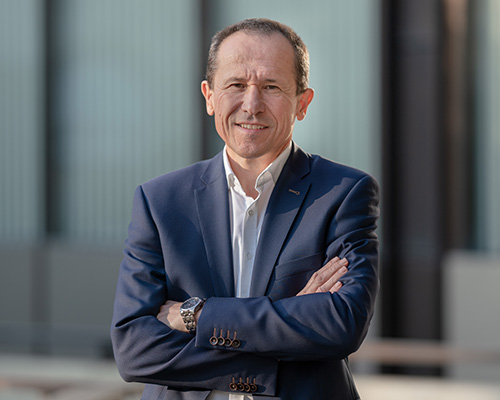
Dr. Andreas Weidler
Managing Director and CEO
Highlight Projects in 2025
In 2025, the Fichtner Group once again successfully supported a wide range of challenging projects worldwide in its Energy, Renewable Energies & Environment, Water & Infrastructure, and Consulting & IT business sectors. The focus was on further developing sustainable technologies, strengthening robust infrastructures, and increasing the resilience of complex systems. We invite you to explore a selection of projects and read the corresponding blog posts to learn more about the solutions achieved and their impact.
Route Planning for a High-Voltage Direct Current Cable in Germany
Pathfinder for SuedOstLink+
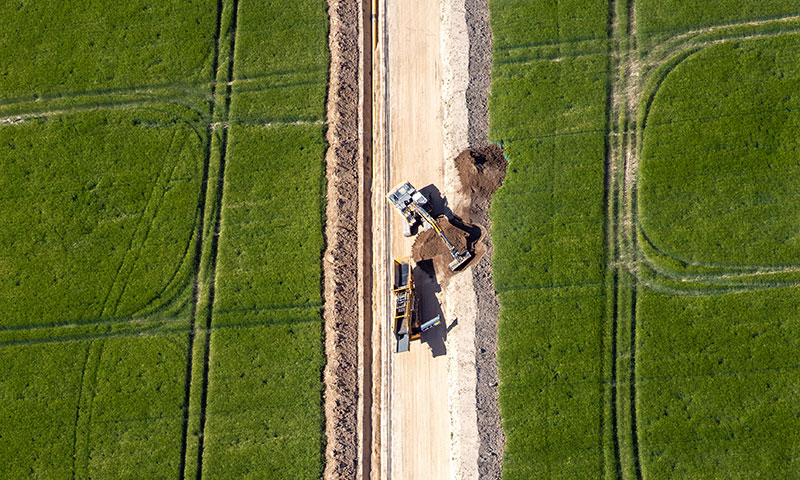
Germany’s energy future is taking shape: Discover how the transmission system operator ‘50Hertz Transmission GmbH’ is planning the optimal route for SuedOstLink+ with Fichtner’s support. This 200-kilometer-long high-voltage direct current cable connects Schwerin to Wolmirstedt and is a key project for enabling wind-generated electricity to flow efficiently from the north to the south of Germany. At the same time, it enhances the performance and resilience of Germany’s energy infrastructure. Learn more about the challenges and our tasks.
Automated Connection Checks in the Low-Voltage Grid, Germany
Standard Cases Checked in Seconds
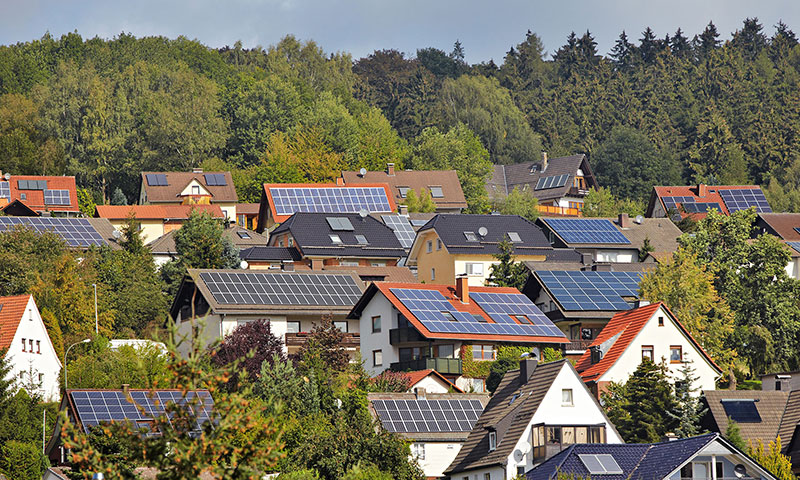
The expansion of solar photovoltaics and e-mobility is significantly increasing the demands placed on low-voltage grids. At the distribution system operator ‘Netze BW’, the previously manual process of checking connection requests has been replaced by a digital solution developed in collaboration with Fichtner – based on a digital twin that is updated daily and enables fast, automated assessments. This makes an important contribution to the efficient planning and reliable operation of modern distribution grids.
Nhon Trach 3 and Nhon Trach 4 Gas-Fired Power Plants in Vietnam
Planning and Project Support from A to Z
To achieve its goal of a climate-neutral electricity supply, Vietnam is focusing not only on massively expanding renewable energies, but also on building flexible gas-fired power plants. During the transformation of the energy system, these play an important role in ensuring a stable and resilient energy supply. Fichtner is assisting PetroVietnam in implementing the state-of-the-art Nhon Trach 3 and 4 gas-fired power plants and is supporting the project from preliminary design through to commissioning and beyond.

Nhon Trach 3 and Nhon Trach 4 Gas-Fired Power Plants in Vietnam
Planning and Project Support from A to Z
To achieve its goal of a climate-neutral electricity supply, Vietnam is focusing not only on massively expanding renewable energies, but also on building flexible gas-fired power plants. During the transformation of the energy system, these play an important role in ensuring a stable and resilient energy supply. Fichtner is assisting PetroVietnam in implementing the state-of-the-art Nhon Trach 3 and 4 gas-fired power plants and is supporting the project from preliminary design through to commissioning and beyond.
New District Heating Interconnection Pipeline in Bremen, Germany
Right Through the City, Right on Schedule
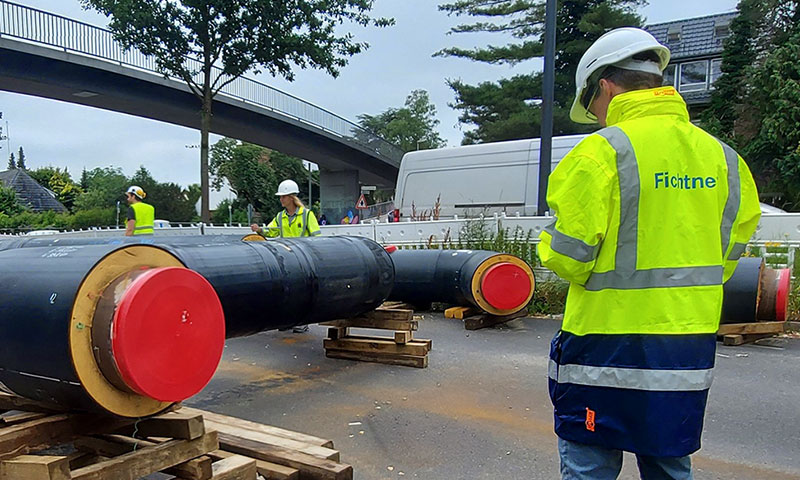
With the completion of a 7.5-kilometer-long interconnection pipeline through the city of Bremen, the district heating supply has been expanded and the urban heating infrastructure’s security of supply has been strengthened. Fichtner handled the planning, overall site management, and construction supervision for the operator ‘wesernetz Bremen’. Implementing the project in a densely built-up urban area required the highest level of coordination, flexibility, and engineering expertise.
Realignment Of the ERP and Billing System at a Regional Energy Utility, Germany
More Than Just a System Change
The EGT Group is realigning its ERP and billing landscape – with far-reaching implications for processes and organization. This realignment reflects the growing importance of modern and reliable IT systems that support the efficient and future-proof management of critical energy infrastructures. Fichtner supported the transformation process from strategy through to tendering for a future-proof solution.

The Fichtner Group in 2025
Healthy Growth in Turbulent Times
The Fichtner Group posted another record year in 2025, increasing its gross operating revenues to 374 million euros. Buoyed by a strong domestic market and encouraging performance from its overseas subsidiaries, the company’s growth story continues. This article highlights the key metrics, success factors, and expectations for the current year.
6
Consecutive Years of
Increase in Gross Operating Revenues
374
Million Euros in
Gross Operating Revenues
2,417
Number of
Employees
The Fichtner Group in 2025
Healthy Growth in Turbulent Times
The Fichtner Group posted another record year in 2025, increasing its gross operating revenues to 374 million euros. Buoyed by a strong domestic market and encouraging performance from its overseas subsidiaries, the company’s growth story continues. This article highlights the key metrics, success factors, and expectations for the current year.
6
Consecutive Years of
Increase in Gross Operating Revenues
374
Million Euros in
Gross Operating Revenues
2,417
Number of
Employees